Dear Friends,
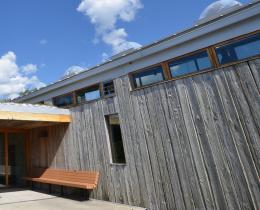
Each spring, as I walk past the Omega Center for Sustainable Living, I’m reminded that some of the most important work on this planet happens without fanfare but with great effect.
How Living Systems Show Us the Power of Collective Action
Inside the Eco Machine™, water moves slowly through a series of living systems—plants, microorganisms, sunlight—each playing its part. No single element is responsible for the transformation. It’s the steady, ongoing cooperation of the whole that makes the system work.
I find myself thinking about that often, especially on Earth Day.
Why Environmental Progress Goes Beyond Politics and Policy
We tend to look to big moments—elections, policies, global agreements—to measure progress. And those moments do matter. But what I’ve come to understand over the years is that environmental progress doesn’t begin or end there. It doesn’t hinge on any one administration or decision. It lives in the daily actions of people, in communities, all over the world.
How Communities, Educators, and Families Drive Climate Solutions
It lives in classrooms, where educators are helping the next generation understand not just the challenges we face, but the possibilities. It lives in neighborhoods, where families are making choices—sometimes small, sometimes significant—that shape how resources are used and conserved. It lives in the work of farmers, builders, organizers, and local leaders who are finding practical ways to protect the places they call home.
These efforts may not always make headlines. But they are steady. They are resilient. And taken together, they are powerful.
Local Action, Global Impact: Climate Leadership in Practice
At Omega, we’ve had the privilege of witnessing and supporting this kind of work through our partnerships around the world.
In Ghana, we’ve worked alongside leaders like Hussein Kassim, who is helping people—especially women, Indigenous groups, and rural households—to develop solutions rooted in their own communities. His work reminds us that innovation doesn’t only come from the top down; it grows from lived experience and local knowledge.
Here in the United States, Felicia Davis and the HBCU Green Fund are helping transform historically Black colleges and universities into hubs of resilience—places where sustainability, education, and community development come together in meaningful ways.
In the Ecuadorian Amazon, Daniel Santi and the Kichwa people of Sarayaku continue to protect what they call the Living Forest—a powerful expression of the idea that nature is not a resource to be used, but a living system to be respected and defended.
And in Papua New Guinea, Maryanne Rimbao is lifting up the voices of Indigenous women and youth, ensuring that those closest to the impacts of climate change are also at the center of shaping the solutions.
These are very different places, cultures, and contexts. And yet, what connects them is a shared understanding: that real, lasting change is built day by day, through commitment, collaboration, and care.
From Global Climate Talks to Local Action on the Ground
Through our accreditation with the United Nations climate process, the Omega Center for Sustainable Living has been able to support partners like these in participating in global conversations. But what inspires me most is not what happens at those conferences—it’s what happens when people return home and continue the work on the ground.
That’s where progress becomes real.
Our Power, Our Planet: Where Change Begins
So this Earth Day, as we reflect on the theme “Our Power, Our Planet,” I invite you to consider where that power lives in your own life.
It may be in the choices you make each day. It may be in the conversations you have, the communities you’re part of, or the work you do. However it shows up, it matters.
Because just like the living systems we rely on, change doesn’t depend on any single force. It emerges from all of us, working together—steadily, persistently, and with purpose.
With gratitude,

Robert “Skip” Backus
Omega CEO Emeritus & OCSL Founder