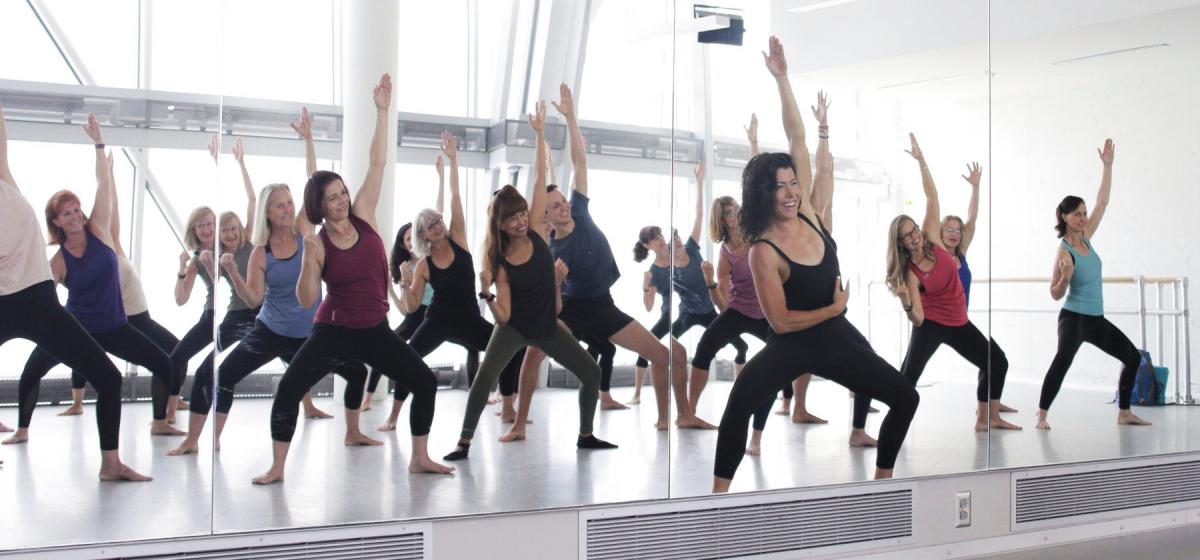
Discover why integrating specific music, targeted corrections, and movement makes Essentrics® a transformative full-body workout that is of growing interest in the scientific community, as well as the health-conscious public.
Join Essentrics creator Miranda Esmonde-White, award-winning Broadway music director and international conductor Steven Gross, and the Master Training Team in this comprehensive 5-day event with multiple sessions:
Discover the Powerful Connections Between Music, Anatomy & the Brain
Participants build upon the knowledge gained throughout their certification. Learn about some of the latest scientific studies on fascia, music, and movement, and how to apply this knowledge to help reduce your clients’ pain levels while increasing their rate of healing. Leave with a new and tangible ability to impact your clients’ joy and health through their own experience with music and movement.
Advanced Class Design & Teaching Skills
Refine your instruction with class design strategies, precision in cueing, and targeted corrections. Guide your students in releasing tension more effectively and with greater ease, moving with enhanced efficiency and fluidity, deepening their stretches for improved range of motion, harnessing the healing synergy between music and Essentrics movements, and unlocking the hidden energy in music for additional healing benefits.
The Art of Music in Movement
The essential role of music in Essentrics is to support healing and guide movement. Analyze music and its relationship to the movement of muscles, fascia, and joints. Learning how to meld movement and music, while understanding the neuromuscular benefits each musical selection offers, makes your classes more fun and your students’ ability to move with ease more rewarding. Learn how to create powerful playlists and use music to guide movement, improving the overall effectiveness and enjoyment of your classes.
Anatomy & Neurology
Deepen your anatomical knowledge with a focus on fascia and neurology. Identify and prioritize corrections to address imbalances, elevating both group classes and personal training sessions. New insights are offered into how to identify the difference between primary and secondary mistakes and how to strategically apply the simplest and fastest solutions.
The Psychology of Movement
Explore the intricate connection between emotional processes, chronic pain, and healing. Gain insights into the psychological aspects of movement and help guide your students to release muscle tension, improve their coordination, and explore their limits.