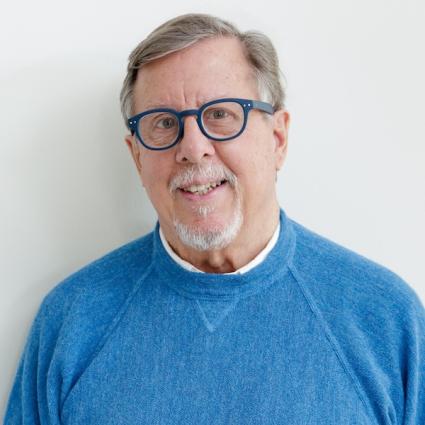
Richard Schwartz began his career as a family therapist and an academic at the University of Illinois at Chicago. There he discovered that family therapy alone did not achieve full symptom relief, and in asking patients why, he learned that they were plagued by what they called “parts.” These patients became his teachers as they described how their parts formed networks of inner relationships that resembled the families he had been working with. He also found that as they focused on and, thereby, separated from their parts, they would shift into a state characterized by qualities like curiosity, calm, confidence, and compassion. He called this state the Self and was amazed to find it even in severely diagnosed and traumatized patients. From these explorations, the Internal Family SystemsSM model was born in the early 1980s. IFS now has an emerging evidence base and has become a widely used form of psychotherapy. It provides a non-pathologizing, optimistic, and empowering perspective and a practical and effective set of techniques for working with individuals, couples, and families.
Richard is also the Founder of the IFS Institute, which offers extensive training and certification programming for mental health and other professionals globally. He is a Teaching Associate in Psychiatry at Cambridge Health Alliance, a Harvard Medical School teaching affiliate. Richard has authored or coauthored more than 10 books on Internal Family Systems and related topics, including No Bad Parts and Internal Family Systems Therapy. Dick lives near Chicago with his wife Jeanne, Vice President of the IFS Institute, close to his three daughters and six grandchildren.
What People are Saying About Richard Schwartz
“Schwartz makes the invisible visible in ways that are compelling, lucid, and clinically useful. He shows how the psyche is both systemic and accessible, and his model could well revolutionize family therapy.”
—Douglas H. Sprenkle, PhD, editor of the Journal of Marital and Family Therapy
“Each of us is lobbied by a clamor of disembodied inner voices. In his clinical work, Richard Schwartz engages with each of these voices....By applying family systems approaches to this interior assembly, Schwartz enables the client to comprehend and grapple effectively with many problems, even with such bedeviling maladies as bulimia and self-mutilation. ”
— Richard Chasin, MD, associate clinical professor of psychiatry, Harvard Medical School