When students come to me complaining of chronic back or knee pain, the first thing I check is whether their glutes are activating properly during movement. Weak or inactive glutes are one of the most common causes of low back pain, knee strain, and hip instability in yoga, running, and everyday movement.
Why Glute Activation Matters for Back & Knee Health
Your gluteus maximus is the largest and strongest muscle in your body. Along with the gluteus medius and gluteus minimus, it allows you to extend your leg back in space, externally rotate your hip, and move your leg from side to side. In other words, strong glutes support activities such as running, lunging, climbing stairs, and standing up from a seated position.
How does this relate to pain? Our gluteal muscles need to contract while we are engaging in yoga and other forms of movement in order to stabilize our hips and prevent compensations by other muscle groups, including the quadriceps, hamstrings, and erector spinae. When the glutes are forgotten, the result is often low back and knee pain.
Current lifestyles and work situations only exacerbate this problem. Sitting for long periods of time can lock the glutes, adductors, and hamstrings in a long (overstretched and weak) or short (tight and weak) position, and can adversely affect posture through the curvature of the spine.
3 Glute-Activation Exercises to Prevent Back & Knee Pain
To prevent this, we need to teach our glutes how to fire properly. Try these three glute-activation exercises commonly used by physical therapists and movement specialists to activate and strengthen the glutes. Performing these movements before yoga, running, or strength training can help improve hip stability and reduce strain on the lower back and knees.
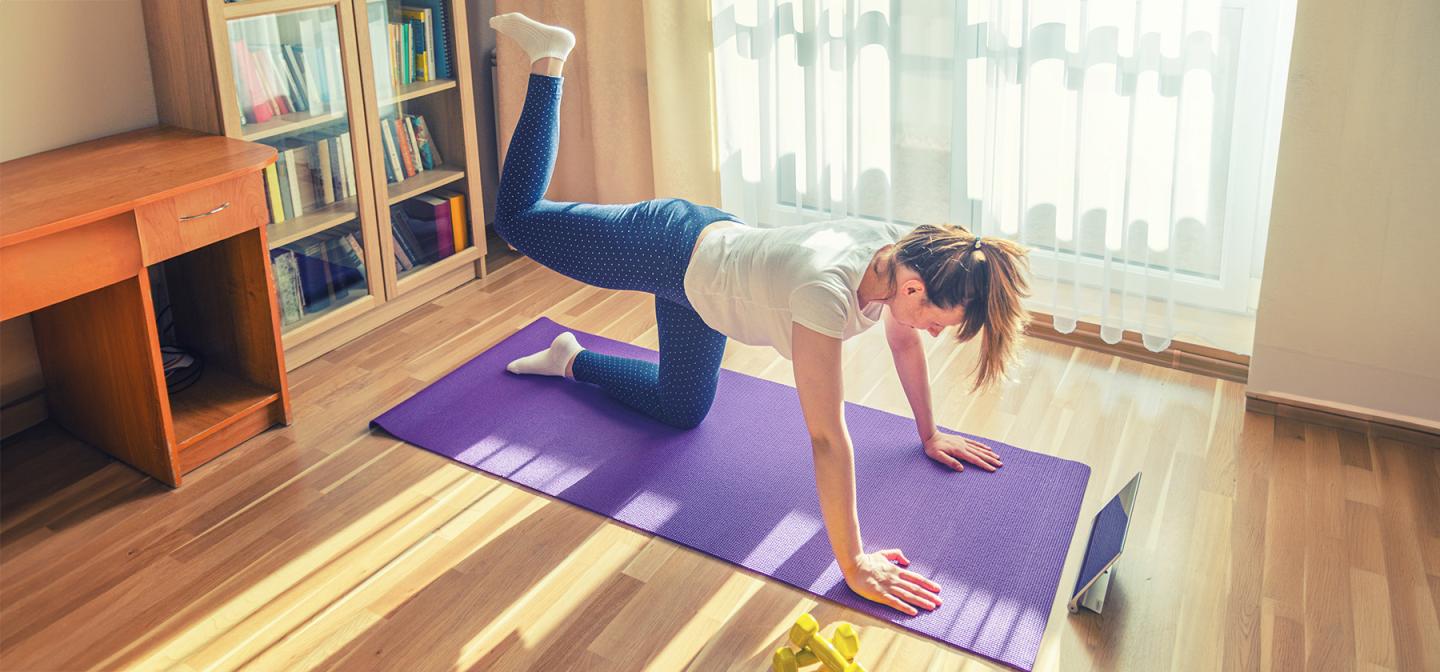
Exercise 1: Donkey Kicks for Glute Activation
Loop a resistance band around the balls of your feet.
Come to all fours with your hands under your shoulders and knees under your hips.
Extend your right heel toward the ceiling keeping your lower back neutral or even slightly rounded.
Do 5-15 repetitions.
Switch sides.
Exercise 2: Clamshells for Glute Strength & Hip Stability
Loop a resistance band around your legs above your knees.
Lay on your right side with your legs bent and feet touching. Keep your head in line with your hips and feet. You can support your head with your hand or a yoga block.
Keep your right knee on the ground and lift your left knee toward the ceiling while maintaining contact with your feet. Hold for 30 seconds.
Slowly bring your knees to touch and then drive your left knee back toward the ceiling.
Do 5-15 repetitions.
Switch sides.
Exercise 3: Glute Bridge to Strengthen the Posterior Chain
Loop a resistance band around your legs above your knees.
Lay on your back with your feet hip-width apart and walk your heels close to your hips.
Push your knees out until you feel resistance from the band.
Flatten your lower back against the ground and then lift your hips.
Three variations for your feet (choose the one that turns on your glutes!):
Press the four corners of your feet into the ground.
Lift your heels.
Lift your toes.
Hold for 30 seconds.
Slowly bring your hips down to the ground and then drive them back up again.
Do 5-15 repetitions.
Incorporating a few minutes of glute-activation exercises into your warm-up can make a significant difference in how your body moves and feels. Strong, responsive glutes help stabilize the hips, protect the knees, and reduce unnecessary strain on the lower back during yoga, running, and everyday activities.