ARTICLE

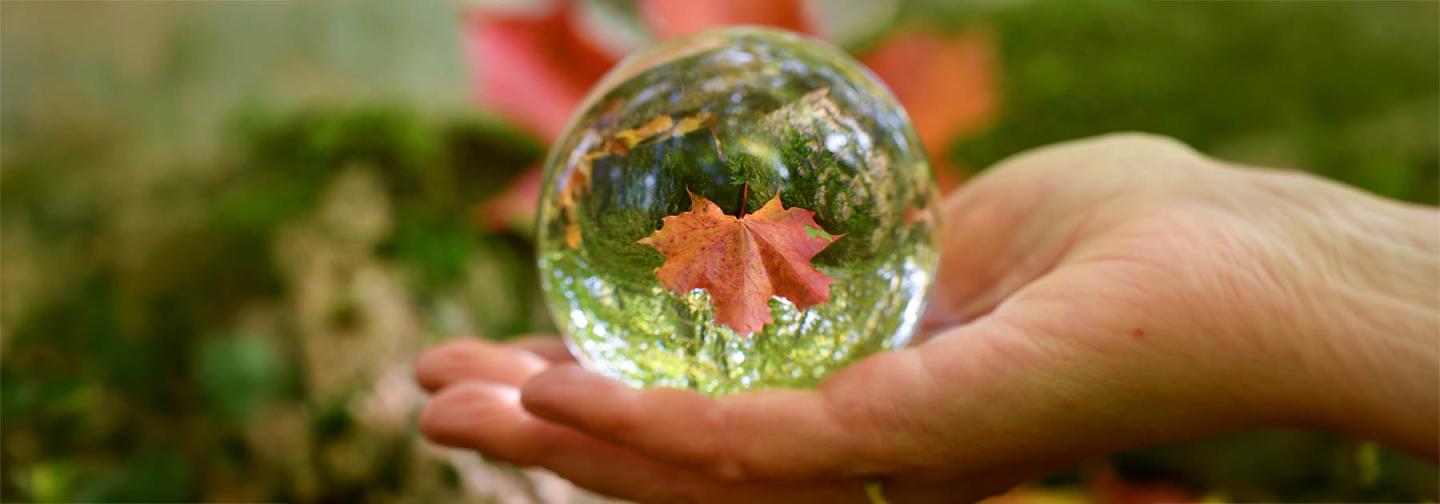
Hand holding a glass sphere reflecting an autumn leaf, symbolizing perception, consciousness, and holistic healing.

June 26, 2026

Add to favorites

The Black Square in Plain View: How Conditioning Shapes Health & Identity

How do our beliefs shape health and identity? Terry Hasty explores illness, consciousness, and the Divine self through story and spiritual insight.

By Terry Hasty

In preparing for the cold weather this winter, my husband, Haydn, started looking for the heater to keep the pond warm for the koi. For two weeks, he looked everywhere for the circular green heater; he checked the usual spots, emptied the shelves, and retraced his steps, but he could not find it anywhere. Finally, he gave up and ordered a new one to ensure the fish would be safe when the freezing temperatures hit.

A week after putting the new heater in the pond, he found the original one. It was sitting right there, in plain view. But here is the catch: it was not green, but black. It was not a circle, but a square.

That is exactly how the conditioned mind works—especially in how we perceive identity, health, illness, and spiritual possibility.

If you believe a thing must look a certain way, you will not only look for that specific version—you will become blind to anything else. If the mind is looking for a "green heater," it will never see the "black one" sitting right there. This is the power of our expectations: they don't just guide our search—they define our reality.

This leads to a piercing question for our lives: How can you fulfill a grand destiny if you believe you are anything but grand? If you have trained yourself to see only your smallness, your inadequacies, or your past mistakes, you will be functionally blind to the "Divine manifest" that resides within you.

The Stories We Learn to Believe About Ourselves

From the moment of birth, we are steeped in a set of social, cultural, and religious constructions. 

These begin as mental ideas, evolve into vital emotional habits, and eventually solidify into physical modes of being. We actually form bodies and personalities that we believe will give us the best chance of survival.

As the Apostle Paul famously noted, we often see "through a glass, darkly." We view ourselves through the smudged lens of our conditioning rather than "face to face" with our true nature. We must learn to see differently—not in some distant afterlife, but here and now. Nowhere is this shift more vital than in our relationship with illness and the physical body.

From the moment of birth, we are steeped in a set of social, cultural, and religious constructions.
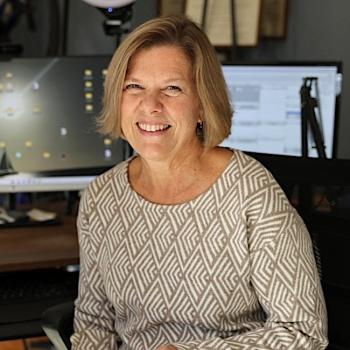
Terry Hasty

Illness as a State of Consciousness

In the teachings of the Indian philosopher Sri Aurobindo and The Mother, as well as many modern innovators, health is viewed not merely as a biological event, but as a state of consciousness. They suggest that illness often begins as a vibration or a suggestion in the subtle atmosphere before it ever manifests in the physical tissue.

During the Black Death of the 14th century, it was a recognized medical observation that fear and despair were primary drivers of infection. Doctors viewed fear not just as a psychological by-product, but as a physiological mechanic that physically "opened" the body to disease. In Integral Yoga teachings, this is described as the "nervous envelope"—a subtle shield similar to an aura. 

When we are centered, happy, and harmonious, this shield remains intact. However, a shock of anger, deep fatigue, or prolonged dissatisfaction "scratches" this envelope, allowing intrusions to enter the physical frame.

How Conditioning Shapes the Body

The body is often the most resistant part of our being to change. This isn't necessarily due to "bad will," but rather the nature of matter itself. The Mother described the human composition, the mind-body connection, using a powerful elemental hierarchy:

  • The mind is like air: subtle vibrations that can change direction instantly
  • The vital (emotions) is like water: force and energy that can be redirected
  • The body is like stone: condensed energy characterized by stability and rigidity

Because the physical consciousness is conservative and inert, it clings to habits. This is why emotional causes of illnesses often linger. We build a cage of fixed ideas around our cells, telling ourselves, "Every spring I get this infection" or "I always get sick when I’m stressed." These mental scripts act as clockwork, repeating the disease pattern in a mechanical way.

Breaking the Mental Cycle of Illness

To break this cycle, we must adopt the proper attitude of holistic healing. As the book, A Course in Miracles, suggests, we must learn that we are not merely a body. Sri Aurobindo advises a practice of dissociation: localizing the pain in the body but refusing to identify with it. The illness is in the body, but it is not in you.

A 3-Step Practice for Reclaiming Inner Peace

To reclaim your health and move toward your grander destiny, consider this 3-step practice when symptoms arise:

  1. Quiet the Mind: The moment you feel a symptom, the mind often begins a vibration of panic. Do not rush to search for symptoms or catastrophize. Stop the mental broadcast of "I am getting sick." Recognition of a sensation is necessary; acceptance of a label is not.
  2. Practice Detachment: Observe the body as a separate instrument. Shift your perspective to that of the "Witness Consciousness." Remind yourself: "I have a body, but I am not my body. This is a disturbance in the instrument, but the player remains untouched."
  3. Call for Peace: The Mother taught that "peace and stillness are the great remedy." Visualize a solid block of white light or peace above your head. Mentally pull it down through your forehead, throat, and heart, settling it into your cells. Do not fight the pain; instead, allow this light to dissolve the constriction.

When you stop looking for the "green circle" of your past conditioning, you begin to see the "black square" of the present truth—that you are not a victim of your biology, but a master of your consciousness. Imagine being quiet instead of anxious, observing your body, not as the definition of who you are but as an instrument of the Divine

It may be hard to imagine that you are that, but it is a much grander destiny than pretending you are not.