ARTICLE

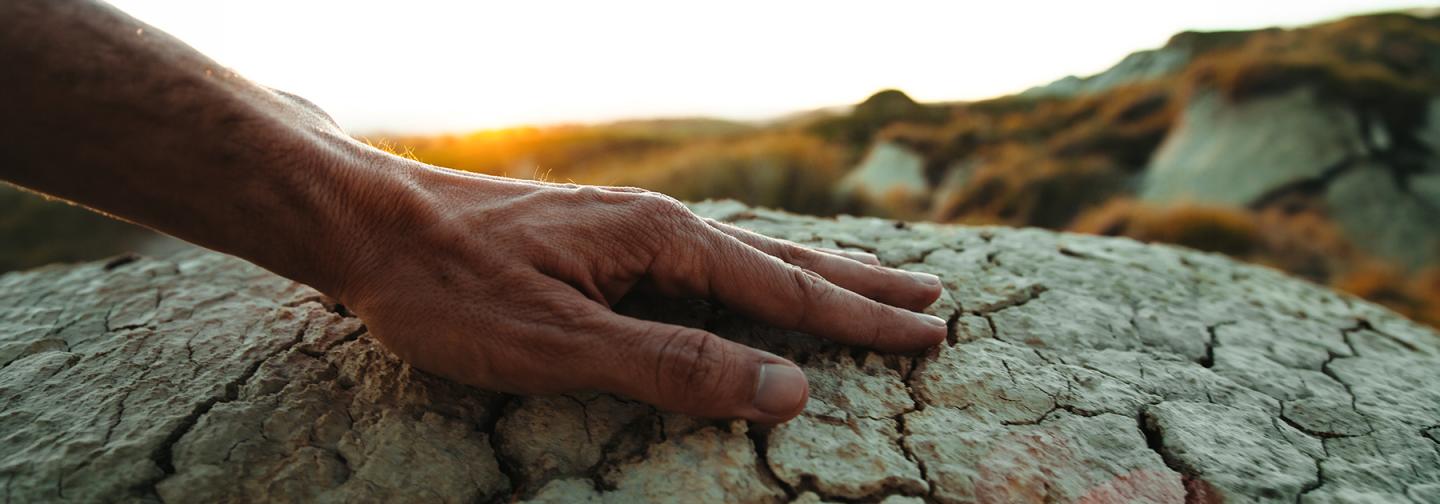
Hand resting on sunlit earth, symbolizing earth-based meditation, mindfulness, and connection with the natural world.

July 30, 2026

Add to favorites

Earth-Based Meditation: How Nature Restores Awareness & Wholeness

Buddhist teacher Ji Hyang Padma explores earth-based meditation, nature as teacher, and simple practices for cultivating presence and interconnection.

By Ji Hyang Padma

Earth-based meditation invites us to experience nature not simply as a peaceful backdrop for mindfulness, but as an active teacher. Buddhist teacher Ji Hyang Padma shares how nature meditation can deepen awareness, restore a sense of interconnection, and help us rediscover our place within the living world.

Omega: What is earth-based meditation and how is it different from mindfulness?

Ji Hyang Padma: Earth-based meditation is rooted in the recognition that our natural state of wisdom is inseparable from the natural world. In most conventional mindfulness frameworks—especially those adapted for clinical or corporate settings—the practitioner is placed at the center, working to regulate their own nervous system or improve focus. That’s genuinely useful. But earth-based practice asks a different question: What if the Earth herself is a teacher?

My own teacher, Korean Zen Master Dae Soen Sa Nim, used to tell us: “If you have a question, ask a tree. The tree will give you a good answer.” That is a core meditation instruction. The natural world reflects mind back to itself without commentary, without agenda, which is why meditation in nature can become such a profound teacher. When we practice meditation in and with the earth, we are receiving teachings from a lineage far older than any human institution.

Meditation, Retreat & the Wisdom of Nature

Omega: You often teach using the story of the Taoist rainmaker. What does that story reveal about retreat practice?

Ji Hyang Padma: The rainmaker story—recorded by the sinologist Richard Wilhelm and later championed by Carl Jung—is one of the most concise teachings I know on the relationship between inner practice and outer ecology.

A Chinese village is suffering from severe drought. They send for the rainmaker, who arrives and immediately requests a small secluded hut on the outskirts. Three days later, it rains. When asked how he did it, the rainmaker says he did not make it rain—he simply came from a place of order and alignment. The village was out of alignment with Tao. So he went into solitude until he himself was restored to harmony—and then, naturally, rain came.

Jung believed this story was so essential for Western audiences that he recommended it be included in every lecture series on inner life. What it captures is something Buddhist teaching also points to: the inner work we do in retreat—the work of returning to our innate wholeness—radiates outward. This is not magical thinking. It is the logic of interdependence. When one being wakes up, something shifts in the field around them. Retreat creates the conditions for that kind of restoration.

Omega: How does the Zen tradition specifically approach wilderness retreat and solitary practice in nature?

Ji Hyang Padma: The eighth-century Korean Zen Master Won Hyo wrote beautifully about this: “High peaks and lofty crevices are the dwellings of a wise man. Green pine trees and deep valleys are the places for those who practice Buddhism.” The wilderness solo meditation retreat is a time-honored rite of passage in Zen—particularly for teachers. There is a reason for this. The forms of Zen practice—the precision of posture, the breath, the koan—create what I think of as a clear mirror. In the wilderness, with those forms held steady, you can see your own mind with extraordinary clarity. There is no noise to hide behind.

I trained for years doing Kyol Che, the 90-day intensive retreat in Korean Zen temples. Even in an unheated meditation hall in winter, the room felt warm—alive with collective presence. During rest periods, I would hike around the mountain and bow at the shrines of hermitages dotting the hillside. Those small acts of bowing reminded me that I was held within a web of relationships: the land, the lineage, all beings in that ecosystem were supporting my practice. That is the lived experience of interdependence. It is not abstract.

Learning From the Living World

Omega: You completed a 100-day solitary retreat in the high desert of California. What did that practice teach you?

Ji Hyang Padma: I was living at Mountain Spirit Center—a temple in the high desert of Southern California, surrounded by wilderness. The air was full of sage and chaparral. I undertook a hundred-day kido chanting retreat and gave myself to it completely. My neighbors were mule deer, jackrabbits, coyote, lizards, sandstone and limestone cliffs, red dust that covered everything, fierce wind.

What I discovered was intimacy. Not intimacy in a sentimental sense—but genuine knowing. I knew that place. I inhabited it fully. And in that inhabiting, I came to understand what our practice means when it says “mountain is always blue, water always flows to the ocean.” The mountain doesn’t resist being a mountain. The water doesn’t debate its direction. There is something profoundly liberating about practicing in that company.

What I bring back from the mountains is the knowledge that the temple is within my own heart. And that allows me to return to the city, to students, to the clinical setting—and offer something real. My presence can convey to others their own true treasure inside. That is what earth-based practice makes possible.

What I bring back from the mountains is the knowledge that the temple is within my own heart. And that allows me to return to the city, to students, to the clinical setting—and offer something real.
Ji Hyang Padma

Earth, the Sacred Feminine & Embodied Wisdom

Omega: You connect earth-based practice with the sacred feminine and embodied knowing. Can you say more?

Ji Hyang Padma: Within Western society, our disconnection from the Earth is historically intertwined with our disconnection from the sacred feminine. The ancient traditions recognized women’s fertility—and women’s embodied wisdom—as integral to the land’s replenishment. In Vedic tradition, the very word for goddess—Bhavani—is rooted in the Sanskrit bhu, meaning “being, becoming, living.” Bhu also refers to space, the world, the Earth itself. The Goddess is identified with creative force and with the act of creation. That is not incidental. It is a teaching about how knowing and being are not separate.

In Buddhism, our core teaching on emptiness—the Prajna Paramita Sutra—is traditionally said to have been given first to Maya, the Buddha’s mother. That is a lineage statement. It says: the wisdom of interconnection, the wisdom that is not separate from what it knows—prajna—comes through the feminine, through the Earth, through embodiment. When we do earth-based practice, we are recovering that channel of knowing.

I also offer coursework on the divine feminine within Buddhism for our sangha. I find that especially for women—and particularly for young women on college campuses who are navigating a society that relentlessly objectifies the feminine body—connecting with images like Kwan Seum Bosal, the Bodhisattva of Compassion, offers something essential: a mirror for their own awakened nature. This is not sentiment. It is what the Buddhist teachers Rita Gross and Grace Schireson point to when they say that the men who dismiss gender as a construct still use the men’s room. The relative and absolute are both real. Earth-based practice asks us to honor both.

Meeting Grief Through Earth-Based Practice

Omega: How can meditation in nature help us work with grief and impermanence?

Ji Hyang Padma: Retreat intensifies everything—including our encounter with what we’ve been avoiding. During my first formal retreat, my work practice was to clean the judgment hall, the space where offerings for the deceased were left. Each mealtime, we offered food and clear water to the hungry ghosts—the unresolved energies of those who had died with unmet needs. These are not merely symbolic acts. They train the practitioner in mindfulness, in recognition of interdependence, and in right relationship with death.

When we can sit with death, we are sitting with our deepest fears, our deepest vulnerabilities. The natural world is an extraordinary companion in this work. Seasons turn. Trees die and become soil. In that company, our own resistance to impermanence softens. Growth becomes a natural process rather than something we have to force or manage.

There is a story I love about Sul, an eighth-century Chinese Zen practitioner who attained realization while washing clothes by the river when the temple bell rang across the water. Later in her life, she cried at the funeral of her granddaughter. The villagers whispered: she has seen through birth and death—why does she cry? And Sul replied: “These tears are better than a sutra, better than chanting. When my granddaughter hears these tears, she will enter Nirvana.” That is what earth-based practice ultimately cultivates: full-hearted presence. Not transcendence of the human, but the capacity to be completely here—with joy, with grief, with the texture of the earth under our feet.

A Simple Earth-Based Meditation Practice

Omega: What is a simple earth-based meditation practice for beginners?

Ji Hyang Padma: I offer this practice, which I call Deep Listening in the Wild. Find a wildlife sanctuary, a forest, or any place where you can connect with wild nature—somewhere not entirely managed by human intention. Give yourself at least an hour to wander its paths with all your senses fully awake.

Notice what you see. What do you hear? What fragrance is carried on the wind? What is the texture of the earth under your feet? What medicinal plants grow nearby? What is the crow saying—and what is it responding to? What ecosystems of life are quietly happening all around you?

Then turn inward: check in with the kinesthetic awareness of your body. How does your pulse quicken in certain places? How does your breath change in response to the surroundings? What does the sensation in your belly tell you, compared to the sensation in your hands or the soles of your feet? Try to see each tree, each leaf, each flower with fresh eyes—as if you have never walked in a forest before.

When you finish, carry that quality of attention back into your ordinary life. Nature meditation isn’t confined to the forest. The forest shows you what is always available.