ARTICLE

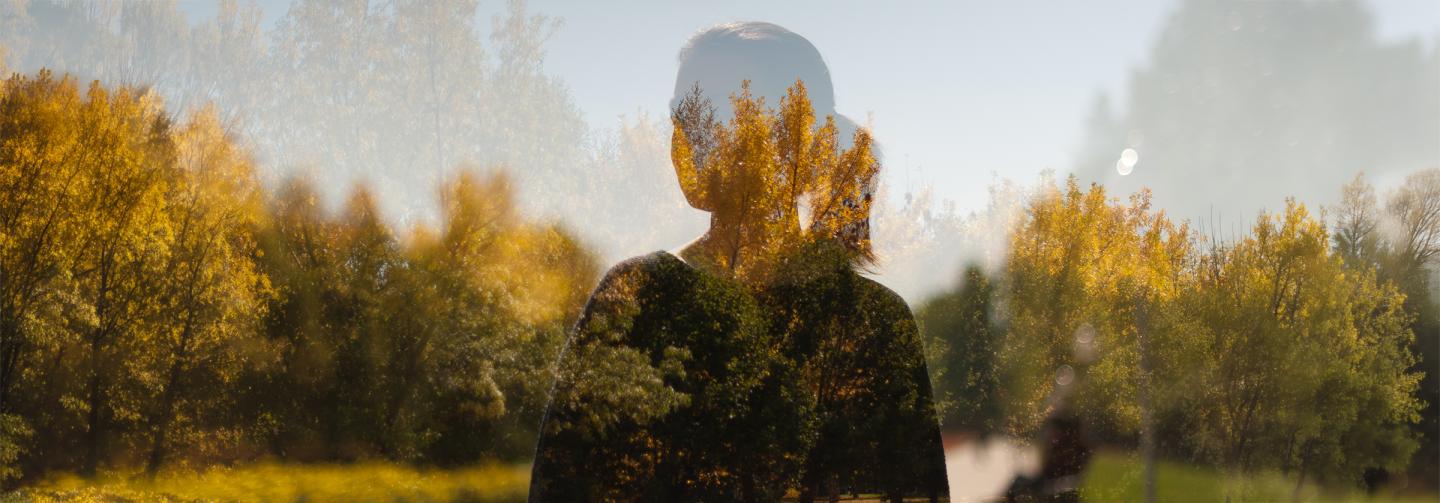
Silhouette of a person blended with a sunlit forest, symbolizing healing, self-discovery, and inner transformation.

June 24, 2026

Add to favorites

Healing as a Creative Act: Depth Psychology & the Path of Becoming

Explore how depth psychology views healing as a creative act, inviting greater wholeness through self-initiation, imagination, and soul.

By Roxanne Partridge

We have become extraordinarily good at explaining ourselves. We can name attachment patterns, nervous-system states, relational dynamics, coping mechanisms, and trauma responses with precision.

Yet from a depth psychological perspective, understanding ourselves is not always the same as transforming—many people still move through their days feeling strangely untouched by their own insight.

And this makes sense. Explanation alone might provide the relief of conceptual distance, but it rarely transforms us. Many women arrive in my practice carrying years of self-awareness and therapeutic fluency, yet still searching for a deeper experience of healing, meaning, vitality, eros, creativity, and participation in their own lives that feels, well, like aliveness.

When experience is translated quickly into mechanism, management, diagnosis, optimization, or inner systems requiring continual negotiation and regulation, something vital begins to recede from this overexposure to Apollonic light.

What modern healing culture seems to forget is the psyche, or what Marion Woodman called the bodysoul, is not merely something to shake out or stabilize.

The Creative Function of the Unconscious

From a depth psychological perspective, the unconscious is not simply a repository of wounds and conditioning. The unconscious has a creative function. Psyche calls us toward greater depth, complexity, connection, and wholeness in our lives and in the world—often through the disruptions and diversions we call symptoms, but also through our dreams, desires, and greatest pleasures.

In Jungian psychology, this movement is often understood as part of the lifelong process of individuation.

In Susan Rowland’s writings on the ecocritical psyche, human beings are understood as metonymic expressions of anima mundi, the world soul. A psychic field far wider than our personal histories feeds our roots and dreams us forth.

Healing as a Creative Act

What is often missing in trending conversations around healing is the recognition that working with the unconscious is itself a creative act. 

When healing is soul-centered, possibility is felt rather than sought.
Roxanne Partridge

To create is not merely to produce. It is to bring forth, to participate in emergence, to enter into relationship with and to touch what is not yet fully known. From a depth psychological perspective, creativity is bound to the very process of individuation itself: the psyche’s ongoing work of drawing us into deeper relationship with what uniquely animates us—the central developmental process in Jungian psychology.

Psyche continually asks us to participate in the ongoing creation of meaning, embodiment, relationship, and becoming.

In this sense, the image of the artist becomes psychologically important as a way of relating to life. The artist enters into dialogue with uncertainty, instinct, contradiction, image, imagination, and the unseen. Dialogue, as Paulo Freire wrote, cannot exist without love. Love is present when we turn toward what needs to emerge rather than merely manage what we already know.  

Beyond Healing as Management

Much of our modern healing culture organizes around fear, even in its most well-informed approaches. Fear of dysregulation. Fear of uncertainty. Fear of emotional intensity, contradiction, instinct, grief, desire, and the unknown movements of psyche. We learn to continually monitor, optimize, explain, and regulate ourselves while growing increasingly estranged from the multidimensional creative life of the bodysoul.

Yet healing, in its etymology, belongs to a lineage of the restoration of wholeness, and this asks for something deeper than management and the warding off current folk devils.

It may ask for the restoration of our creative participation in life itself.

Self-Initiation & the Journey Toward Wholeness

What I’ve found in my work with women is this movement toward wholeness is inseparable from self-initiation.

Not initiation as achievement or spiritual identity, but rather initiation into creative, loving, relationship with what Carl Jung called the Self—a central concept in depth psychology describing the larger living totality of the psyche—that extends beyond the conscious ego and continually invites us into greater present and evolving wholeness.

Self-initiation, in this sense, is a living participation with soul. A creative work with psyche that unfolds across a lifetime, through cycles of rupture and renewal, coherence and disorientation, descent and re-creation. Depth psychology, at its best, approaches inner life as a living relationship capable of deepening us.

The art of self-initiation asks for spaces and praxis capable of holding psyche as living, symbolic, and unfinished. Where dream, body, imagination, grief, eros, contradiction, creativity, and soul no longer need to flatten themselves into preconceptions of legibility in order to belong.

What Soul-Centered Healing Makes Possible

What I’ve seen in nearly two decades in the field of depth psychology and women's healing work, is when healing is soul-centered, possibility is felt rather than sought. 

Symptoms once experienced only as obstacles begin revealing directives for next steps. Desire returns. The body feels less like an object to manage and more like a participant in meaning-making. Inner and outer life fall into step with one another. Women in my practice often discover they are no longer standing outside themselves trying to optimize their lives into wholeness, but participating in a more intimate and creative relationship with becoming.

This is not the achievement of a perfected, good, and well-behaved self, but what happens when participation in the ongoing creative work of becoming reunites us with the spirit that animates all.

In a culture increasingly devoted to optimization, depth psychology offers another vision of healing. Through relationship with the unconscious, creative practice, dream, imagination, and self-initiation, we are invited into the ongoing process of individuation—not as self-improvement, but as participation in a fuller experience of wholeness.