ARTICLE

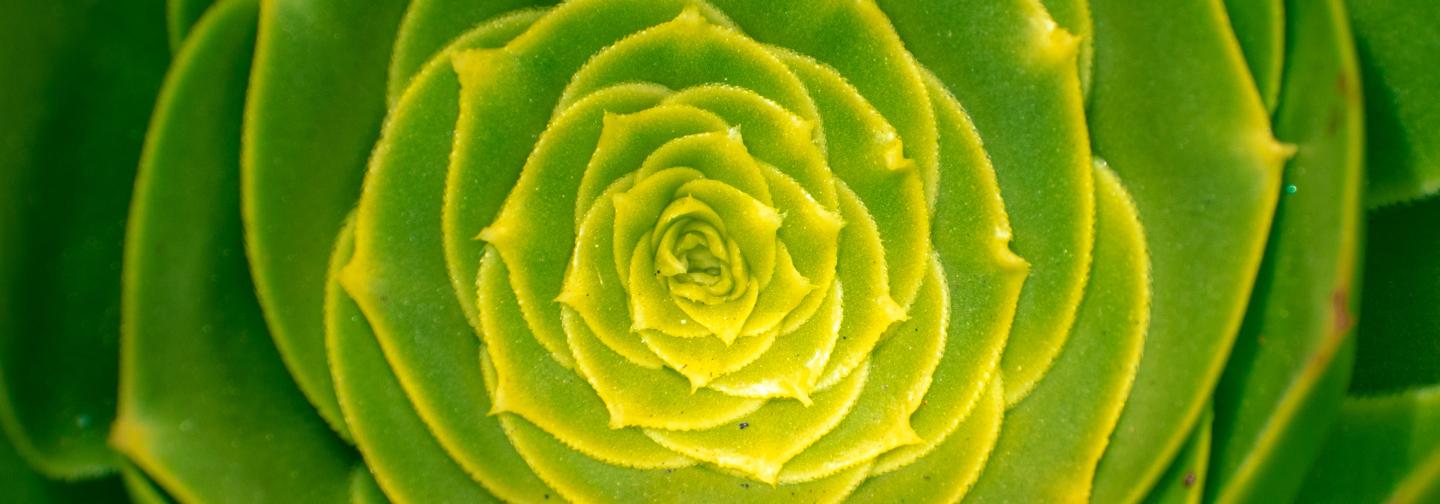
Sacred geometry in the leaves of a succulent plant

July 29, 2026

Add to favorites

How Sacred Geometry Can Transform the Way You See Nature, Art & Yourself

Discover how sacred geometry reveals the hidden patterns of nature through hand drawing, meditation, and creative practice with artist Vandorn Hinnant.

Featuring Vandorn Hinnant

Nature’s palette is rich in patterns that quietly shape the world around us—from the delicate geometry of flowers, seashells, and snowflakes, to the mathematical marvels of honeycombs, pinecones, and star-studded galaxies.

Sacred geometry is the study of those timeless forms of patterns in nature. Learning to draw them is an invitation to pause and discover the beauty woven into the fabric of nature.

For artist and sculptor Vandorn Hinnant, sacred geometry isn't simply a collection of beautiful patterns—it's a language, one spoken by nature itself. Drawing these forms, he says, is less about creating art than cultivating a new way of seeing, and learning from the natural world

Learning Nature's Hidden Patterns

Science, math, and music all factor in the creative process of drawing, painting, and sculpture for Vandorn. Rather than equations to memorize, geometry became a study of relationship for him—his creative process with sacred geometry becomes art.

It transformed his understanding of sculpture, painting, architecture, music, and even the natural world, he says. The circles, lines, and proportions that once seemed abstract revealed themselves as recurring patterns woven throughout creation.

Vandorn's work draws inspiration from a lineage of thinkers and artists—including Euclid, Pythagoras, Plato, Archimedes, and Leonardo da Vinci—who recognized geometry as both a practical discipline and a pathway toward understanding harmony and proportion.

"I see my work serving as a reminder of the underlying order in the universe," he says.

The intent behind these works of art is to serve viewers as a source of inspiration, as a springboard for the imagination, and as a visual bridge between the arts and the sciences.

“I see the circle as a symbolic representation of the human soul, and soul’s origins. Two circles sharing a radius are the genesis of all of my work,” he says.

Drawing as Meditation

Using simple tools—a compass, straightedge, pens, and colored markers—foundational geometric forms are constructed by hand.

Making art is inseparable from personal transformation, Vandorn says. Each drawing or sculpture is both an act of creation and an act of becoming. The artist serves as a conduit, translating inner perception into visual form. This is alchemy, he says, a transformative experience that  becomes an invitation for others to look more deeply and experience the quiet beauty that underlies the natural world.

As patterns gradually emerge, the process often becomes meditative. Careful attention replaces distraction. Curiosity replaces self-judgment. The drawing becomes less about producing an image and more about inhabiting the creative process itself.

By creating a series of geometric studies, one begins to recognize the same organizing principles reflected throughout nature—from plants and crystals to waves and galaxies—and explore how these timeless forms have inspired artists, architects, and philosophers across cultures for centuries.
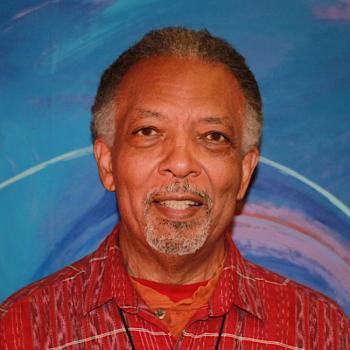
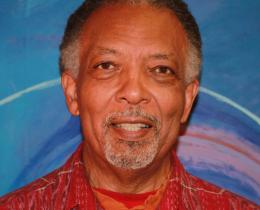
We are more beauty-filled than we dare to see. We are more love and light than we dare to recognize.
Vandorn Hinnant

Where Art Meets Science

One of the elements of Vandorn's work is the way it bridges disciplines often viewed as separate.

His drawings and sculptures weave together art, mathematics, music, philosophy, and spirituality into a visual language centered on relationship and harmony. The Golden Ratio in art (Golden Proportion) and other recurring geometric principles appear throughout his work, reflecting what he sees as nature's underlying patterns of organization. For him, sacred geometry offers a meeting place between analytical understanding and intuitive knowing.

Beauty as a Way of Seeing

Vandorn often describes the circle as a symbol of wholeness and interconnectedness—a simple form from which increasingly complex patterns emerge.

That idea extends beyond the page.

His artwork invites viewers to pause and notice the relationships that often go unseen. In his view, creating and experiencing art can remind us of the same sense of balance and beauty we naturally encounter outdoors.

Many people recognize that feeling intuitively. Time spent in nature often brings a sense of ease and perspective. Vandorn's work explores whether art can evoke a similar response by reflecting the patterns in nature already present throughout the living world.

The result is less an attempt to explain life's mysteries than an invitation to engage with them through careful observation.

A Practice of Presence

In his method of teaching sacred geometry, participants don't simply learn how to construct geometric designs—they experience a creative practice that encourages patience, precision, and sustained attention.

“Geometry has the potential to inspire people to look for more evidence of beauty and goodness, and truth even,” says Vandorn. “We are more beauty-filled than we dare to see. We are more love and light than we dare to recognize”

5 Ways to See Sacred Geometry in Nature

Start With a Circle

Before creating complex patterns, practice drawing simple circles with a compass. Notice how one circle can give rise to another, revealing increasingly intricate relationships through repetition and symmetry.

Let Nature Be Your Guide

Look closely at flowers, seed heads, pinecones, shells, leaves, spider webs, snowflakes, or tree branches. Rather than trying to copy what you see, ask yourself: What pattern is repeating? Where is the symmetry? How does one shape grow from another? Nature often reveals geometry through rhythm, proportion, and relationship.

Draw Slowly & With Intention

Sacred geometry isn't about sketching quickly or creating a perfect illustration. Use a straightedge, compass, and fine-tipped pen to construct each line deliberately. The slower you work, the more you'll notice—not just on the page, but in your own attention.

Notice Beauty in Relationships

Sacred geometry isn't simply about shapes—it's about how shapes connect. Watch how circles overlap, lines intersect, and forms expand from a common center. Vandorn Hinnant describes geometry as a language of relationship, one that echoes throughout the natural world.

Treat Drawing as a Contemplative Practice

Approach each drawing with curiosity instead of judgment. Rather than asking, "Did I get it right?" ask, "What am I noticing?" Over time, the practice becomes less about mastering geometry and more about cultivating presence, patience, and a deeper appreciation for the beauty woven throughout nature.