ARTICLE

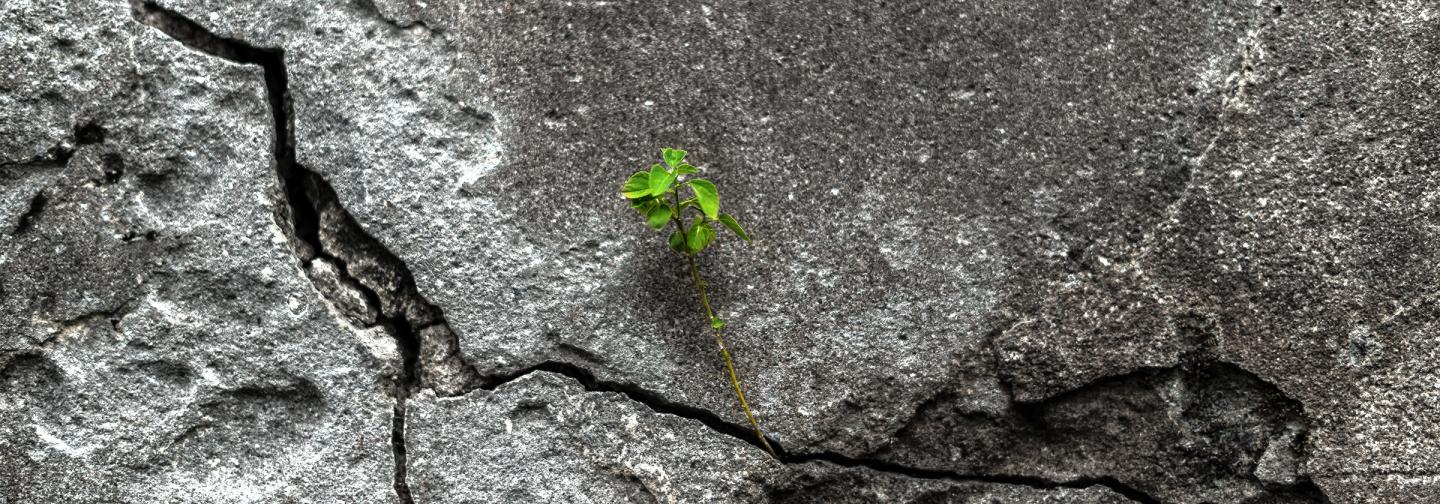
Plant growing out of crack in concrete, symbolizing hope

July 8, 2026

Add to favorites

Teaching Yoga in Correctional Facilities: Lessons on Trauma & Healing

Lea Bender reflects on teaching yoga at Rikers Island and other correctional facilities, and what it reveals about trauma, healing, and resilience.

Featuring Lea Bender

Yoga teacher Lea Bender has spent years teaching yoga in correctional facilities, including Rikers Island and jails throughout New York State. Through this work, she has witnessed firsthand how yoga practices can support trauma recovery, nervous system regulation, resilience, and healing. In this conversation, she reflects on what teaching incarcerated populations has taught her about our shared humanity.

What Drew You to Teach Yoga Inside Jails?

It began with a personal experience that intersected with my original yoga teacher training a decade ago in Brooklyn, New York. For a brief period, I experienced the criminal legal system from the inside. It lasted only about 36 hours and I was never in a jail, only holding cells, but it was enough to pry my eyes and heart wide open.

People were screaming, crying, fainting, and in visible distress. There wasn't enough room for everyone to sit at the same time. There was an open toilet, and the only source of drinking water was attached to it. No one seemed to know what would happen to them next. The smallest act of kindness felt profound. I remember a correction officer giving a woman an apple and hearing her say, "This apple is everything."

After that experience, I knew I wanted to get back inside a jail or prison one day and offer that same kind of kindness.

During this time, I was completing my yoga teacher training and going through a difficult divorce. Looking back, being in that vulnerable, open state was a blessing because I absorbed every drop of yoga I was offered. Not only the physical practice and the breathwork—both of which are tremendously helpful for stress and anxiety—but also the philosophy.

The teachings of the Yoga Sutras in particular had a profound impact on me. It was incredible to discover that words written thousands of years ago could feel so relevant to what I was experiencing. They offered a different way of understanding suffering, resilience, and the possibility of change.

What Was It Like Teaching Yoga at Rikers Island?

At the time, I had no perspective about how unusual Rikers Island was because it was the first jail I'd ever been inside. Now, having taught in several facilities upstate, I realize that Rikers is unique—uniquely chaotic, uniquely dirty, and uniquely challenging.

That year teaching trauma-informed yoga at Rikers was the best “teacher training” I've ever had. I learned how to work with people in many different states of trauma and to embrace uncertainty. It ended in March 2020 when the pandemic hit and outside programs could no longer go in. 
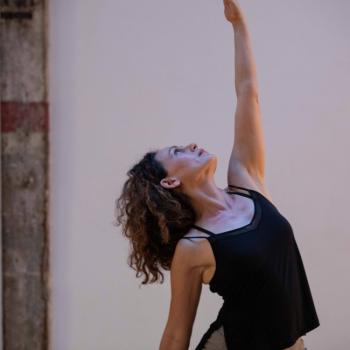
Most importantly, I learned that no one is the worst thing they ever did.
Lea Bender

What Surprised You Most About Working With Incarcerated Populations?

I learned very quickly to throw away whatever lesson plan I had and respond to what was actually happening in the room. I learned to be fully present with each student.

I also learned that someone who might seem intimidating, angry, or closed off when you first meet them can transform into a thoughtful, and deeply sensitive human being right before your eyes. Most importantly, I learned that no one is the worst thing they ever did.

What Does Yoga Teach Us About Trauma & the Body?

The transformation that can happen when a person's body begins to relax through yoga practice and nervous system regulation, and their breath begins to slow down is remarkable to witness. Sometimes it happens surprisingly quickly. Not that years of trauma disappear in an hour-long class, but you can see the nervous system begin to calm down and a person's deepest humanity begin to emerge.

When that happens, there's an opportunity to start working with trauma on a deeper level. Yoga offers a wide range of tools for trauma healing and emotional regulation. Movement, breath work, meditation, and philosophy all have a role to play. Some of those tools come directly from yoga's ancient roots, while others reflect the ways these practices have evolved and been adapted over time.

Are the Challenges Faced by Incarcerated People Different From the Rest of Us?

One of the biggest lessons I've learned is that we are far more alike than we are different.

There's actually very little difference between what I teach in a jail and what I teach in a yoga studio. The trauma may be more visible in a jail or recovery center, and often more severe, but all of us face challenges, loss, grief, fear, uncertainty, and stress.

The techniques are simple and universal. Learning how to regulate the nervous system, become aware of our patterns, and create a little space between stimulus and response is valuable whether you're incarcerated or navigating everyday life. I find myself applying the same lessons I teach in jail to my own life all the time.

What Do You Wish More People Understood About Trauma & Healing?

I wish people understood that they have more personal power than they realize.

We can't always control what happens to us. But we do have tremendous influence over how we respond to what happens. Developing that capacity takes practice, support, and patience, especially when we're under stress.

For me, that's one of the most valuable day-to-day lessons yoga offers. Not the promise that life will be easy, but the possibility that by practicing these skills, we can meet life's challenges with a clearer, calmer mind and greater confidence in our own resilience. From that place, we can go deeper.

Teaching yoga in jails has reinforced a lesson Lea returns to again and again: beneath our circumstances, struggles, and histories, our humanity is shared. Whether in a correctional facility, recovery center, or yoga studio, the practices of breath, awareness, and self-regulation can help people reconnect with resilience and the possibility of change.