ARTICLE

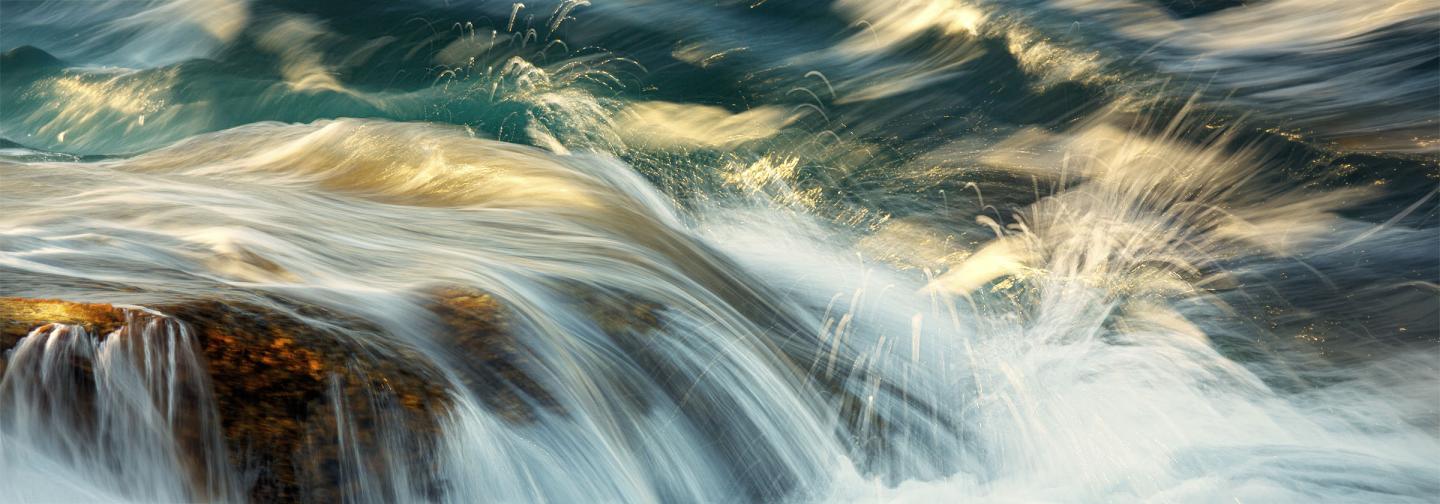
Ocean waves flowing over rocks, illustrating the movement of water, connection, and the embodied practice of belonging in nature.

July 24, 2026

Add to favorites

Water & Belonging: What Water Molecules Can Teach Us About Connection

Explore how water molecules and the movement and somatic practice of Continuum reveal an embodied experience of belonging, connection, and our place in the living world.

By Elaine Colandrea

While reading botanist Robin Wall Kimmerer’s book Gathering Moss, I came across a few facts about the molecular nature of water that resonated with my experiences in Continuum, an embodied movement and somatic practice that cultivates body awareness and a profound sense of belonging.

What Water Molecules Reveal About Belonging

Water molecules have both positive and negative charge. This leads to two very interesting abilities.

Because of this dual polarity, water is optimized for adhering to many different surfaces. 

Water molecules can also easily cohere to each other due to this feature of having both positive and negative poles. In this way, water molecules gather together.

An Embodied Exploration Through Continuum

These thoughts were swimming around in my consciousness while I was in a Continuum exploration. I was alternating between bathing my entire body in the vibration of humming with my hands resting at my heart and lungs, and lightly stroking my skin with my hands while sounding “Sh.” The humming was helping me to a greater awareness of the pulsation of circulation within me, inviting a deeper embodied awareness of my own living rhythms. Stroking my skin attuned me to the tangible outer membrane of myself beneath which vibrated all the fluids that fill my body, bringing me into a deeper relationship with my body's innate intelligence.

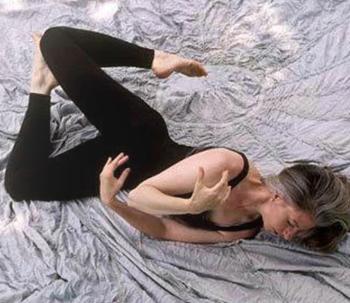
In the next element of the exploration, I began a slow meandering press through various parts of my body into the surfaces below me. This meandering pressing movement brought me to the felt sense of my water body adhering to the ground. As I slowly pressed, I also felt an internal pouring following the pathways of pressing. My internal fluids were cohering in response to the surface pressing of my body.

I was moving very minutely. I felt very present and connected to the ground, experiencing an embodied sense of connection with nature. I felt a deep sense of emotional satisfaction. What came forward was this phrase: “Water belongs—there is no question about existence or purpose. Like water, I belong, because I am primarily made of water.”

The message emerged from my experience of the adherent and coherent qualities of water molecules.

Water belongs—there is no question about existence or purpose. Like water, I belong, because I am primarily made of water.
Elaine Colandrea

The Living Intelligence of Water

The water within me is categorized into different types of fluid depending on function and chemical constituents. What we call blood inside of our vessels when seeped out of capillaries becomes interstitial fluid. When that fluid becomes old, it becomes part of our lymphatic system. Like the water molecules in a waterfall entering a river which eventually enters the ocean, our internal water molecules gather into communities of purpose in an ongoing state of chemical transformation. The quality of belonging continues as water molecules change their chemistry to meet each phase of existence.

This ability to meet the moment—so useful in life—turns out to be built into my biology and physiology. My own body continually models adaptation, resilience, and connection through the living qualities of water.

I can belong and transform due to the nature of water molecules that model the way inside of me every moment of my existence. This embodied knowing feels less like an idea and more like something my body remembers. The living world around me models these processes as well.

Our bodies are composed primarily of water, yet many of us experience ourselves as separate—from one another, from nature, and even from ourselves. Perhaps remembering the qualities of water through embodied practice offers another way of understanding what the experience of belonging truly feels like.

Belonging Is Our Nature

Belonging is not outside of me. Being a part of a living community is not something to yearn for. I belong and I am a part of the living world due to the nature of water.

My experiences in Continuum bring this understanding more strongly into my awareness, for which I am grateful. Might cases of depression and emotional suffering be assuaged by encountering the nature of water within through embodied movement and somatic practice, like we do in Continuum? 

In what ways could our lives, relationships, families, and communities benefit from a lived understanding of the qualities of water and our own embodied nature?