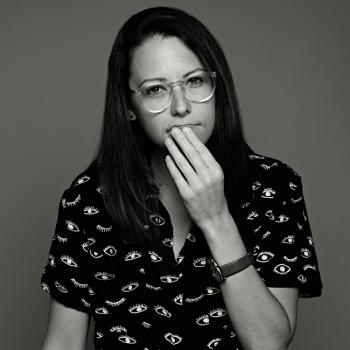
I came to documentary filmmaking by accident. After switching majors in college a few times, I landed on a degree in English and social justice and assumed I would one day be a civil rights litigator. But through a series of missteps in the right direction I write to you today with two Emmy Awards, 10 nominations, and enough hours logged to feel, on good days, like I know what I'm doing.
What drew me to documentary, initially, was the idea that I could make positive change through storytelling and the opportunity to see the world on someone else's dime. What I couldn't have known then—and wouldn't for many years—is that the practice of documentary storytelling turns out to be a contemplative practice of becoming a better human. Which is at least on par with free upgrades on Delta.
The Koan at the Heart of Documentary Filmmaking
I first encountered koans in an intro to world religions course in college. In Zen Buddhism, a koan is a paradoxical question or statement designed to exhaust the analytical mind and catalyze sudden insight. The koan of documentary filmmaking is something like: the moment you think you know someone’s story, you stop seeing it. Which can be a little brutal, because it means the better you get at this work, the more you have to forget in order to do it well.
After years in the field, I'd developed a real feel for the work—pattern recognition in people, instincts I trusted, and shortcuts in process that maximized efficiency. My ability to "be really good with people" served me until it didn't. I could quickly decipher who people were (or so I thought) and built narratives around it, later realizing I often missed what was actually there.
The resolution to the koan is, not surprisingly, also Buddhist. Zen practitioners call it shoshin—"the beginner's mind," and we all know the adage: "In the beginner's mind there are many possibilities; in the expert's mind there are few." As a doc filmmaker, you want those many possibilities. You want the threads that pull, the surprise, the sense that people can challenge your expectations. Because if you start fitting someone’s story into a shape you've already created before you hit record, it doesn't matter how compelling that shape is: It's yours, not theirs. People are not patterns.
This discipline is harder than it sounds, because our brains are wired to do the opposite. This is why I think of documentary filmmaking, like yoga or meditation, as a contemplative practice. And why that practice is contemplative. Since this kind of “conscious seeing” isn’t our knee-jerk reaction, we must recommit to it, over and over again