Are you living with a constant low-grade irritation? You're not alone. Chronic stress often shows up as impatience, frustration, and emotional exhaustion. One surprisingly effective way to reduce stress naturally and build emotional resilience is through making art—even if you don't consider yourself creative.
While we can't control the rest of the world, we can change how we respond to it.
One of the most powerful tools I've found for reducing stress, increasing resilience, and removing that constant state of irritation is starting a creative practice. The benefits of making art extend far beyond making something beautiful—they can positively impact your overall mental wellness.
How Art Reduces Stress & Builds Resilience
Think of art-making as a gym for your mental health. You go to the gym regularly to improve your physical health. Making art is a similar investment in your mental wellness.
While a physical workout raises your heart rate to build muscle, creating art actually slows it and builds resilience.
Research has found that making art can lower cortisol (the body's primary stress hormone), activate the brain's reward pathways, and encourage a state similar to mindfulness. These effects make art for stress relief a powerful tool that helps reduce stress while strengthening emotional resilience over time.
This physiological shift allows you to build new neural pathways, training you to respond thoughtfully to life’s irritations rather than simply reacting to them. And you don't have to be good at art, you just have to be willing. With consistency, you get better and experience many of the benefits of creativity along the way.
How to Start Making Art for Better Mental Health
The other day, I was painting in my sketchbook during an outdoor concert. My friend, Sam, watched me for a few minutes and then said, "I wish I could do that." If I were Yoda, I would have replied, "There is no wishing. There is only doing."
Wishing doesn't build creativity any more than wishing builds muscle. I could sit on my couch and say, "I wish I weighed less and had more muscle tone." But we all know that's not how it works. The people who become physically stronger aren't necessarily blessed with a better body composition. They simply show up consistently. They tolerate discomfort. They practice.
Creativity works the same way. The people who draw, paint, write, play music, or create aren't blessed with some magical gift that the rest of us missed out on. They simply put in the reps. Those small, consistent creative habits are what build confidence and support creativity for mental health over time.
Art teaches us to slow down and become more curious and less judgmental. This shift doesn't just make us better artists. It makes us better leaders, partners, parents, and human beings.
What Painting Glass Bottles Taught Me About Creativity
Recently, as a challenge to myself, I've been painting glass bottles. Painting glass is incredibly difficult because it forces you to see what most people overlook—the reflections, shadows, distortions, and subtle shifts in light. What first appears simple becomes surprisingly complex.
People are the same way. The more we train ourselves to notice nuance, the more we recognize that beneath someone's frustration, confidence, success, or struggle is a much richer and more complicated story. Creativity for mental health can be so transformative because it teaches us to approach both art and people with greater curiosity and compassion.
Three Simple Ways to Start a Creative Practice for Better Mental Health
My challenge to you: Slow down, start doing, and look for the nuances.
- Spend just 30 minutes this week doing something creative (that’s just 10 minutes three times a week)
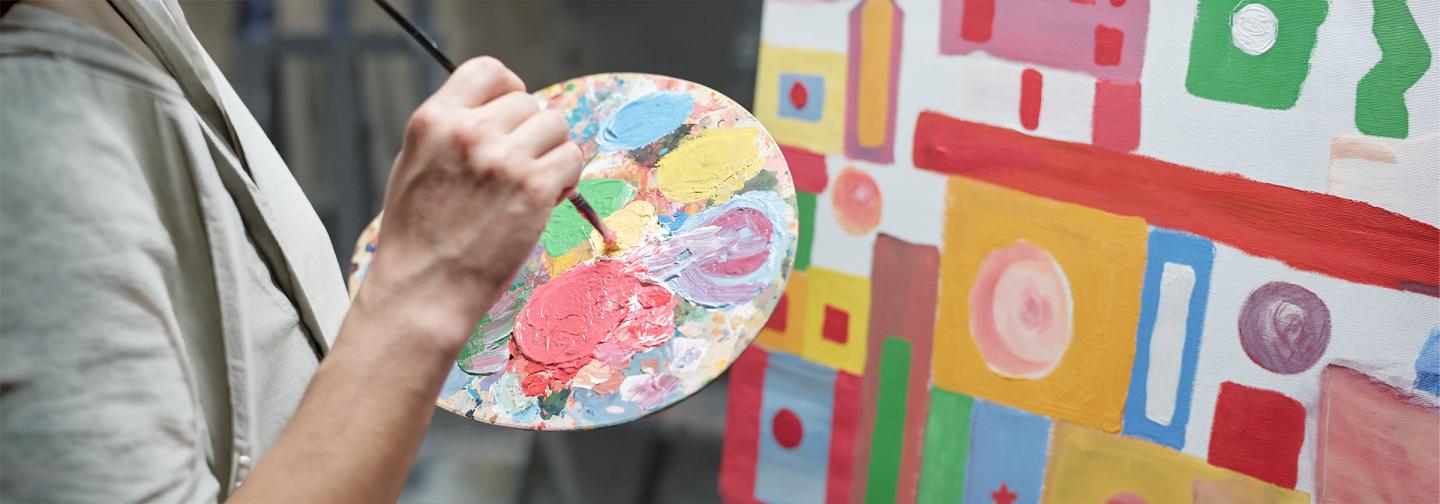
- Draw circles. Paint squares. Doodle.
- Give your creative brain half the time and attention you give your physical body. You might be surprised by how much calmer, less irritated, and more resilient you become.
The goal isn't to become a great artist. It's to become more present and curious. A consistent creative practice can help quiet stress, reduce stress naturally, strengthen emotional resilience, and improve your mental wellness one small session at a time.
What creative practice helps you slow down and reconnect with yourself?